


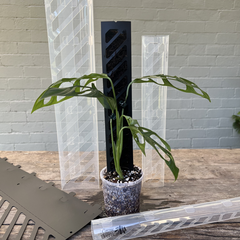


Geogenanthus Poeppigii - The Fabric of the Rainforest
If you've ever run your fingers across seersucker leaf and appreciated that distinctive puckered texture, you'll understand immediately why this plant earned its common name. The Seersucker Plant brings that same satisfying rippled quality to its leaves, creating one of the most tactile and visually intriguing houseplants you can grow.
Native to the floor of primary rainforests in the Amazon basin, Geogenanthus Poeppigii has evolved to thrive in the shadowy understory where dappled light filters through the canopy above. This makes it one of those rare houseplants that actually prefers low light conditions, perfect for those dim corners where other plants struggle.
The genus name Geogenanthus comes from Greek words meaning "earth-borne flower," referring to the unusual way the plant produces its flowers from the lower nodes, appearing to emerge directly from the ground. It's a botanical quirk that adds to the plant's unique character.
The Foliage
The leaves are where this plant truly captivates. Each one is broadly oval with a deeply puckered, quilted surface that catches the light in fascinating ways. The texture isn't just visual; run your finger across the leaf and you'll feel those distinctive ridges and valleys.
The colouration is equally striking. The upper surface displays dark green with silvery-green longitudinal stripes running parallel to the midrib. Under certain lighting, the leaves can appear almost black with a glossy, metallic sheen. Flip a leaf over and you'll discover rich purple undersides that add another dimension to the plant's appeal.
The overall effect is sophisticated and slightly mysterious, like a plant that belongs in a Victorian conservatory or a moody botanical illustration.
Growth Habit
Geogenanthus Poeppigii grows in a low, spreading manner with a creeping or trailing habit. The plant produces suckers and slowly spreads via underground rhizomes, creating dense clumps of foliage over time.
Expect mature plants to reach around 15-20cm in height with a spread of 30-60cm. This compact, ground-hugging growth makes it excellent for terrariums, hanging baskets, or as an underplanting beneath taller specimens. It's also perfectly sized for desk or shelf display.
The stems are somewhat succulent, with prominent nodes and internodes. All parts of the plant have a slightly fleshy quality, which gives it some tolerance for occasional lapses in watering.
Light Requirements
Here's where the Seersucker Plant really shines (or rather, doesn't need to). This is a true low-light champion, having evolved on the shaded rainforest floor where direct sunlight rarely penetrates.
Low to medium indirect light is ideal. A north-facing window, a spot set back from brighter windows, or even rooms with only artificial lighting can work well. The plant will maintain its rich colouration and continue growing steadily in conditions that would have most houseplants struggling.
Avoid direct sunlight, which can scorch the delicate leaves and fade their beautiful colouration. If you notice the leaves looking washed out or developing burnt edges, move the plant to a shadier location.
Watering
The Seersucker Plant prefers consistently moist soil, reflecting its rainforest origins where humidity is high and the forest floor stays damp. Water when the top centimetre or two of soil begins to dry, ensuring the soil stays evenly moist without becoming waterlogged.
Finding the balance is key. Allowing the soil to dry out completely will cause leaf edges to brown and crisp, while keeping it constantly soggy invites root rot. A well-draining pot and mix help you maintain that sweet spot.
The slightly succulent nature of the stems provides some buffer against occasional dry spells, but consistent moisture will keep the plant looking its best.
Humidity and Temperature
High humidity is where this plant truly thrives. In its native habitat, humidity levels hover around 80-90%. While it can adapt to lower household humidity, it will look its absolute best with levels above 60%.
This makes Geogenanthus Poeppigii an excellent terrarium candidate, where high humidity can be maintained effortlessly. In open-air growing, a humidifier, pebble tray, or placement in naturally humid rooms like bathrooms or kitchens will help. Grouping with other plants creates beneficial microclimates.
Keep temperatures warm and stable, ideally between 15-29°C (60-85°F). The plant doesn't tolerate cold well, so protect it from drafts, air conditioning vents, and temperatures below 10°C.
Potting and Soil
Use a well-draining potting mix that retains some moisture. An aroid mix or African violet soil works well, or create your own blend with standard potting mix, perlite, and orchid bark for improved drainage and aeration.
The plant grows from tuberous roots and branching rhizomes, so it appreciates a pot with adequate depth. Ensure your container has good drainage to prevent water pooling around the roots.
Repotting is typically needed every 2-3 years or when the plant becomes root-bound. Spring is the ideal time to repot or divide established clumps.
Feeding
Feed monthly during the growing season (spring through autumn) with Growth Technology Foliage Focus diluted to half strength (1.5ml per litre). This provides the nutrients needed for healthy foliage without risking fertiliser burn on the delicate leaves.
Reduce or stop feeding during winter when growth naturally slows. The plant isn't a heavy feeder, so err on the side of caution with fertiliser.
Perfect For
- Low light spaces where other plants struggle
- Terrariums and enclosed growing environments
- Humid rooms like bathrooms and kitchens
- Hanging baskets (trailing habit)
- Desk and shelf displays
- Collectors seeking unusual foliage plants
- Underplanting beneath taller specimens
- Those who love textured, tactile plants
Frequently Asked Questions
Why is it called the Seersucker Plant?
The common name comes from the leaf texture, which closely resembles seersucker fabric. Seersucker is a puckered cotton cloth (the name derives from Persian "shir u shakar" meaning "milk and sugar") known for its bumpy, rippled surface. The plant's leaves have the same distinctive quilted appearance.
Is Geogenanthus poeppigii related to Tradescantia?
Yes! Both belong to the Commelinaceae family (dayflower/spiderwort family). Geogenanthus is placed in the same tribe (Tradescantieae) as Tradescantia, making them botanical cousins. You might notice some care similarities between the two.
Why are the leaf edges turning brown and crispy?
This typically indicates low humidity or inconsistent watering. The plant prefers high humidity (60%+) and consistently moist soil. Try increasing humidity with a humidifier, pebble tray, or by moving the plant to a more humid location. Ensure you're not letting the soil dry out completely between waterings.
Can I grow this plant in a terrarium?
Absolutely! Geogenanthus Poeppigii is an excellent terrarium candidate. The enclosed environment provides the high humidity it craves, and its compact, low-growing habit suits terrarium proportions perfectly. It's one of the best plants for creating that lush rainforest-floor aesthetic.
How do I propagate Geogenanthus Poeppigii?
Division is the most reliable method. When repotting in spring, gently separate healthy sections of the root system, ensuring each division has roots and several leaves. Stem cuttings can also work, rooted in moist medium under high humidity.
Please Keep in Mind
Geogenanthus Poeppigii is a compact, low-growing rainforest plant prized for its distinctive puckered leaves with silvery-green stripes and purple undersides. It thrives in low to medium indirect light and consistently moist soil, preferring high humidity levels above 60%. This makes it an excellent choice for terrariums, bathrooms, or shaded corners where other plants might struggle. The toxicity status of this plant is unclear from available sources, so we recommend keeping it away from curious pets and children as a precaution.
If you are from a quarantine restricted state and would like to purchase this plant, we recommend using Paradise Distributors concierge service. Make sure to contact them prior to purchasing: info@rareplants.net.au
LET'S TALK ABOUT HOW YOUR PLANTS GET TO YOU & HOW YOU CAN PICK THEM UP!
Alright, so here's the deal with shipping - we try our best to send all our plants potted and ready to go, but sometimes due to larger orders or when we're moving through some big changes, we'll send some plants semi-bare rooted. If you haven't come across this before, it basically means we carefully remove a bunch of the soil before packing them up. I know that might sound a bit scary if you've never ordered plants online before, but trust me, this is actually a really smart way to do it! The main reason we do this is because it creates so much more room in the box, which means we can fit way more plants in one shipment for you. More plants in one box = more green goodness arriving at your door at once! The plants honestly handle the journey better without all that heavy, wet soil sloshing around too. Just make sure you've got some fresh potting mix ready to go when your green babies arrive, because they'll want to get tucked into their new home pretty quickly!
Now, let's chat about what actually fits in our boxes. We can safely fit about 4-6 plants in one box, or if you're stocking up on supplies, one box can hold 3 bags of medium plus 1L of Growth Technology. We really don't recommend adding heavy items with your plants though - it just puts extra stress on your precious plants during transit and limits how many we can fit. If your order ends up being heavier than our standard box can handle, we'll reach out to you about additional postage fees. We're always transparent about costs, no sneaky surprises!
When Does Everything Ship Out?
Here's how our timeline works - we process and ship orders the week after you place them. So if you order on a Tuesday, your plants will get packed and sent out sometime the following week. We ship Monday through Friday (because let's be real, we all need weekends to recharge!), and we're aiming to get your order out within 4-6 business days of processing. Sometimes things take a tiny bit longer because we're a small but mighty team, and we take absolute care in making sure every single plant is packed perfectly. Like, we're talking individual attention for each plant here. We don't rush this stuff!
Once your order ships, you'll get an email with your tracking number. If you haven't received that tracking email, it just means we're still working on your order - it hasn't left us yet. Please be patient with us! We promise we're working as fast as we can while still making sure everything is done right. We pack orders in chronological order to keep things fair for everyone, so no one's getting special treatment or jumping the queue. First come, first served, that's how we roll!
The Journey to Your Doorstep
All our orders ship with Australia Post, and here's something cool - they operate 24/7! That means even if your order gets sent out on a Friday afternoon, it's still making its way to you over the weekend. The postal system doesn't sleep, and honestly, that's pretty amazing for getting plants to you quickly. You can generally expect your plants to arrive within 2-7 days after we ship them, depending on where you are in Australia. Metro areas tend to be quicker, regional spots might take the full week, but either way, your tracking number will keep you in the loop the whole time.
And here's the thing that always blows people's minds - our plants are absolute troopers. We've tested this extensively, and they can genuinely survive in their boxes for up to three weeks if needed. Obviously we don't want them sitting around that long, but life happens, mail gets delayed sometimes, and we want you to know that your plants are prepped and ready to handle whatever the postal system throws at them. While we do our best to avoid delays, occasional unforeseen circumstances may slightly impact delivery times, but rest assured, your plants are packed with extra care and are tougher than you think!
Quarantine States (WA, NT, TAS)
We currently only ship directly to non-quarantine states. Unfortunately, biosecurity restrictions make it pretty complicated to send plants to Western Australia, Northern Territory, and Tasmania. But don't worry, we've got a solution for you! If you're from a quarantine restricted state and would like to purchase plants from us, we recommend using Paradise Distributors' concierge service. They're absolute legends and can handle all the biosecurity paperwork and requirements for you. Make sure to contact them prior to purchasing so they can give you all the details and help you out: info@rareplants.net.au
Come Visit & Pick Up from the Greenhouse! (Rockdale)
If you're local or just love the idea of picking up your order in person, we've got you covered! Greenhouse collection from our Rockdale location is available the same week you make your purchase. Our opening hours are always changing, so make sure to check booking availability on our 'BOOK TO VISIT' page before purchasing. After you've paid for your order, just head over and book a time slot that works for you. You'll get to pick up your plants AND have a wander through the greenhouse while you're here, which honestly is such a vibe. Just please wear a mask if you're feeling unwell - it's a small space and we want to keep everyone safe and healthy!
PLEASE BE AWARE THAT WE DO NOT SHARE THE GREENHOUSE ADDRESS PUBLICLY BECAUSE ITS OUR HOME ASWELL AS BUSINESS, AFTER YOU BOOK YOU WILL RECEIVE AN EMAIL OR TEXT WITH OUR ADDRESS, IF THE GATE IS CLOSED ON ARRIVAL DON'T WORRY WILL BE RIGHT WITH YOU :) AND PLEASE NO BIG BOUNCY DOGS AS ITS A SMALL SPACE & PLANTS GET DAMAGED WITH HAPPY TAILS :)
Catch Us at Markets!
We do regular markets around Sydney and would love to meet you in person! If you'd prefer to skip shipping altogether and grab your order at one of our market stalls, just email us at info@growinggroundsaustralia.com and we can arrange collection at an upcoming market. It's a great way to chat plants face-to-face, see what else we've got on the day, and save on postage!
Questions? We're Here for You!
If you've got any questions about shipping, tracking, or literally anything else, please don't hesitate to contact us at info@growinggroundsaustralia.com. We love chatting with you guys and we're always happy to help troubleshoot, answer questions, or just talk plants!
Much love from the GG's Team 🌱


